

Bat wings, curtains, salt-pepper shakers… there are so many nicknames for this part of the back arm, the part that hardly anyone doesn't see loosening at one point or another in life.
Although excess skin sagging in this area is very common even when there is excess weight or in a significant weight loss, but certainly not only.
In fact, many women who have a normal and balanced weight and who engage in regular physical activity reach a certain age and find that almost no matter how much they train – the back arm gets depleted.
It is not surprising, then, that arm lift surgery that makes your arm slimmer and shapelier is one of the most common in our -TLV Medical center. Not just with us, by the way, this is one of the most common procedures worldwide. What is important to know about the requested procedure? All the details are here.

What is an arm lift surgery?
Arm lift surgery is a surgical procedure designed to reshape and sculpt the upper arm, usually in combination with liposuction from the area while tightening the excess skin starting at the underarm and at times extends to the elbow (hence the image of bat wings)..
Excess skin occurs for many reasons: Decrease in muscle mass, drastic weight loss, body structure and natural maturation. As mentioned, almost everyone gets there, sooner or later.
In fact, it is one of the oldest procedure in the field of plastic surgery when every year hundreds of thousands of people choose to undergo it.
It’s important to note, in most cases scars remain that extend along the back arm – in the place where the excess skin is located – so if you are bothered by scars should take this into consideration.
In cases where the excess skin and fat are not large, a scar in the underarm only can be considered.
Who Is a Good Candidate for Arm Lift Surgery?
Arm lift surgery is most appropriate for specific patients. The ideal candidate:
- Stable body weight – Candidates should be at or near their goal weight and have maintained it for at least six months. Significant weight fluctuations after surgery can compromise results.
- Excess skin or fat in the upper arm – This may be due to aging, genetics, massive weight loss, or prior pregnancies.
- Good overall health – Candidates should be free from medical conditions that could interfere with healing or anesthesia.
- Realistic expectations – A good candidate understands the trade-offs involved, including the presence of scars, and has a clear understanding of the likely outcomes.
Arm Lift vs. Liposuction: Which Procedure Is Right for You?
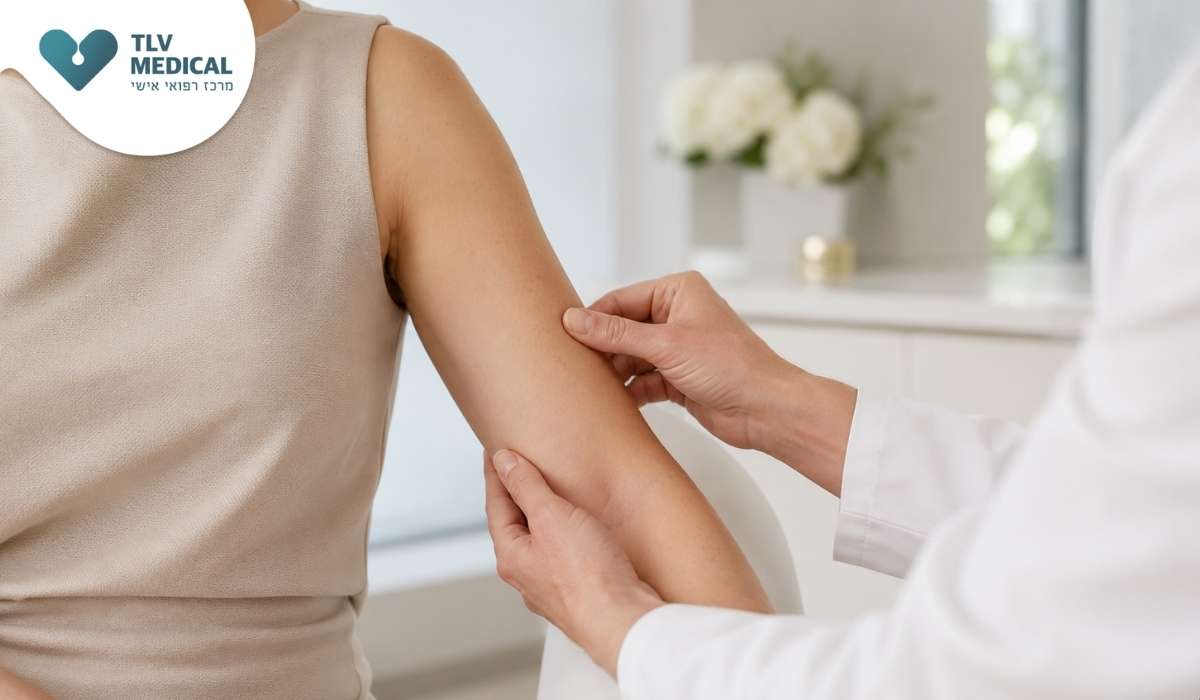
Liposuction is best suited for patients who have localized fat deposits in the upper arm but still have good skin elasticity. The procedure removes fat through small incisions, leaving minimal scarring. However, liposuction does not address loose or sagging skin. In fact, removing fat without addressing excess skin can sometimes worsen the appearance of skin laxity.
Arm lift surgery (Brachioplasty) is designed specifically to remove excess skin and tighten the remaining tissue. It is ideal for patients who have lost a significant amount of weight, or whose skin has lost elasticity due to aging or genetics. The trade-off is the presence of a scar along the inner arm.
In many cases, the most effective solution is a combination of liposuction to reduce fat volume and arm lift surgery to exercise and tighten the skin. Your surgeon will assess your individual anatomy and recommend the approach that will deliver the best outcome for your specific situation.
if the skin snaps back when pinched and has good elasticity, liposuction may be sufficient. If the skin folds or hangs, arm lift surgery is likely necessary.
Types of Arm Lift Surgery
Your surgeon may recommend one of the following approaches:
Mini Arm Lift
A mini arm lift is suitable for patients with mild to moderate skin laxity, primarily in the underarm area. The incision is limited to the axilla (armpit) and results in a shorter, less visible scar. Recovery tends to be quicker compared to a full arm lift. This option is ideal for younger patients or those with early stage skin sagging.
Full Arm Lift
The full arm lift addresses moderate to severe skin excess along the entire length of the upper arm, from the armpit to the elbow. The incision runs along the inner arm and may be shaped into a straight or curved line depending on the surgeon’s technique and the patient’s anatomy. This is the most common type of arm lift surgery and produces the most dramatic improvement in arm contour.
Extended Arm Lift
The extended arm lift is recommended for patients who have undergone significant weight loss and have excess skin not only in the upper arm, but also extending into the lateral chest wall or axilla. The incision is longer and may wrap around onto the side of the body. While this results in a more extensive scar, it allows for a comprehensive improvement in the arm and torso silhouette. This procedure is often part of a broader body contouring plan following bariatric surgery.
How is arm lift surgery performed?
Before surgery
Post surgery
The recovery from arm lift surgery is usually easy. You will come out of the operating room with bandaged arms, for the final tightening of the skin and, of course, to alleviate the swelling.
Most sutures used are of the dissolved type and need not be removed.
Edemas, subcutaneous hemorrhages, and pain will pass on their own after one or two weeks.
Most likely that the instruction will be to avoid showering for 24 hours and to wait with physical activity – certainly strenuous one.
Also, with stitches and elastic bandages on the arms, it is only natural to feel restricted in movement, and in any case, you should not make large gestures or sharp movements.
You will receive the exact instructions for you – including pain medication and various ointments – from your attending doctor and team.
We assume that like most of our patients will be able to go back to work and almost full activity in approx. one week to ten days.

Arm Lift Recovery Timeline, Week by Week
Expected timeline for recovery from surgery:
- Week 1, This is the most intense stage of recovery. Your arms will be wrapped in compression bandages to minimize swelling and support the healing tissue. Expect discomfort, bruising, and significant swelling. Movement is limited – avoid raising your arms above shoulder height and refrain from any strenuous activity.
- Week 2, Swelling and bruising begin to subside noticeably. Most patients are able to return to light desk work or remote work by the end of this week. Drains (if used) are typically removed within the first two weeks. Compression garments should still be worn as directed. Light walking is encouraged to promote circulation, but upper body exertion should still be avoided.
- Weeks 3 – 4, You will likely feel more comfortable in daily activities, though the arms may still feel tight or sensitive. Light stretching may be introduced with your surgeon's approval. Avoid lifting heavy objects or engaging the upper arm muscles intensively.
- Weeks 5 – 6, Most patients receive clearance to gradually return to light physical activity. Scars are still maturing and may appear red or raised – this is completely normal. Scar creams or silicone sheets may be introduced at this point per your surgeon's recommendation.
- Months 2 – 3, Swelling continues to resolve and the contour of the arms becomes more refined. Strenuous upper body exercise may be gradually reintroduced based on individual healing progress. Scars will continue to fade over the coming months.
- Months 3 – 6 and Beyond, The final results of arm lift surgery become fully visible between three to six months post-operatively, as residual swelling resolves and scars mature. Scars typically lighten significantly over time and can often be concealed beneath clothing or swimwear. The arms should feel natural, toned, and proportional to your overall physique.

Arm Lift After Significant Weight Loss
Arm lift surgery is among the most frequently requested body contouring procedures following significant weight loss, whether achieved through bariatric surgery, diet and exercise, or medical treatments. After losing a large amount of weight, patients often discover that the skin, which was stretched over a longer period, cannot retract on its own, regardless of continued exercise or toning efforts.
The upper arm is one of the areas most affected by post weight loss skin laxity. The excess skin can cause physical discomfort, skin irritation, rashes, and hygiene challenges in addition to the aesthetic concerns.
Special considerations for post bariatric patients:
Surgeons recommend waiting until body weight has been stable for at least 12 to 18 months before undergoing arm lift surgery. Operating during a period of continued weight loss can lead to suboptimal results.
Patients typically require a more extensive arm lift, often an extended arm lift, to address the full scope of excess skin. Arm lift surgery is frequently combined with other body contouring procedures such as a lower body lift, thigh lift, or abdominoplasty as part of a comprehensive post bariatric transformation plan.
Arm lift surgery - Possible complications
As in any surgical procedure, an arm lift surgery is not free of possible complications.
However, of course, the choice of the surgeon has an effect on the possibility of complications in every aspect. In any case, you will receive a detailed explanation and methods of prevention from us before and after the surgery, on each of the possible complications.
Possible complications:
- Unsightly scars
- Lack of symmetry
- Lack of sensation
- Infection
- Bleeding and hemorrhages – that are not diminishing and/or increasing.
- Edemas – not disappearing after 4-6 months.
- Venous thrombosis
- Necrosis
Our operating theaters
TLV Medical Center includes large, specious and well-equipped operating rooms with the most advanced technology. As a private medical center which has pledged excellence and professionalism, we are committed to providing our patients the best service at every step in the process, and adherence to this pledge is uncompromising.
The medical center is authorized by the Ministry of Health and operates with backup of a public hospital. The operating theaters management team includes the medical director, the anesthesia director and a nurse in charge of the operating room. The work procedures and standards applied on site are among the highest striving to guarantee our customers the most professional and safest care.
Additional questions
scarring is an inherent part of arm lift surgery and should be taken into consideration before deciding to proceed. The incisions run along the inner aspect of the arm and in most cases extend from the underarm to the elbow. The resulting scar is typically positioned so that it is hidden when the arms are resting at the sides. Over time scars tend to fade.
Liposuction can be an excellent option when excess arm fullness is primarily caused by fat, and the skin retains adequate elasticity. In these cases, removing the fat allows the skin to contract and produce a slimmer arm without the need for incisions along the arm. However, liposuction cannot tighten loose or sagging skin. When skin laxity is the primary issue, as is common following weight loss or with aging, liposuction alone may leave the arm looking deflated rather than toned. In some cases, liposuction is used in combination with arm lift surgery to first reduce fat volume before the excess skin is exercised.
Most patients return to light daily activities and desk-based work within one to two weeks of surgery. The initial recovery phase involves swelling, bruising, and some discomfort, which are managed with prescribed medications and compression garments. Physical activity is gradually reintroduced over several weeks, with strenuous upper body exercise typically restricted for six weeks or more. Full results, including the final contour of the arms and the maturation of scars, become visible within three to six months.
Light walking is encouraged from the first days after surgery to promote circulation and reduce the risk of blood clots. Upper body exercise and any activities that engage the arm muscles must be avoided for a minimum of four to six weeks.
Lower body exercises such as cycling or leg focused workouts may be gradually reintroduced around three to four weeks, subject to your surgeon’s approval. High-intensity workouts, weightlifting, and activities that put stress on the arms should only be resumed after receiving explicit clearance from your surgeon, typically around the six-week mark.
The surgeons performing this surgery.

Amir Inbal, MD
Specialty: Plastic & Aesthetic surgery

Tali Friedman, MD
Specialty: Plastic & Aesthetic surgery
Avraham Amir, MD
Specialty: Plastic & Aesthetic surgery

Ram Silfan, MD
Specialty: Plastic and aesthetic surgery

Tamir Shay, MD
Specialty: Plastic & Aesthetic surgery

Dr. Jonathan Wagman
Specialty: Plastic & Aesthetic surgery
- What is an arm lift surgery?
- Who Is a Good Candidate for Arm Lift Surgery?
- Arm Lift vs. Liposuction
- Types of Arm Lift Surgery
- How is arm lift surgery performed?
- Before surgery
- Post surgery
- Arm Lift Recovery Timeline, Week by Week
- Arm Lift After Significant Weight Loss
- Arm lift surgery - Possible complications
- Our operating theaters
- Additional questions